Skip to content
dailyanew.com
Independent reportingUpdated daily218 stories
kitchen cabinets in Davenport Home Improvement
Primary node

What to Figure Out Before You Pick Kitchen Cabinets in Davenport, IA?

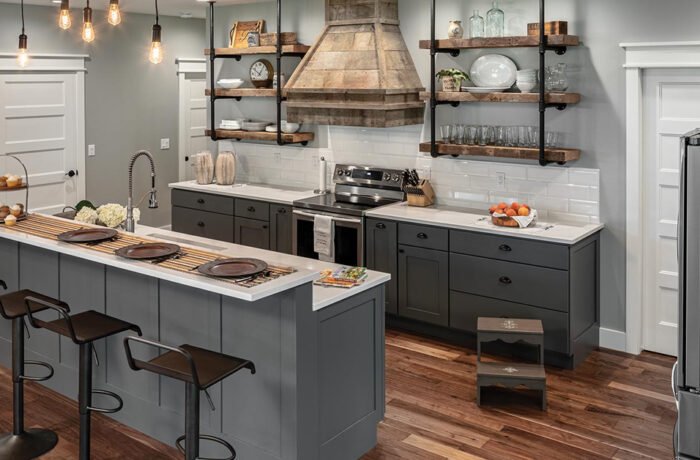
Choosing kitchen cabinets can get confusing when you are comparing door styles, colors, finishes, and storage options. A cabinet that looks great in a showroom may not be the right fit for the way you use your kitchen. Start by narrowing down a few things instead of trying to choose everything at once. If you are planning for kitchen cabinets in Davenport, IA, start with your kitchen layout and daily habits. From there, you can focus on the details that will shape the finished kitchen. Where Should You Start with Kitchen Cabinets? Start with the parts of the kitchen that are not changing. The room size, existing plumbing, appliances, windows, and general layout can all affect what cabinet choices make sense. If you are doing a full remodel, you may have more freedom with the layout. If you are keeping some parts of the kitchen, the new cabinets may need to work around what is already there. Before anything else, decide whether you want stock, semi-custom, or custom cabinets. Stock cabinets come in set sizes and ship quickly, which keeps costs down. Semi-custom cabinets offer more size and finish options with a longer lead time. Custom cabinets are built to your exact layout and specifications, which gives you the most flexibility but also the highest cost and longest wait. This decision affects your budget, your timeline, and how far your layout can be adapted, so it is worth settling early. If your existing cabinet boxes are in good condition, refacing is also worth considering. Replacing just the doors, drawer fronts, and hardware can give the kitchen a new look at a lower cost than a full cabinet replacement. A. Think About the Cabinet Style Cabinet doors can change the look of the whole kitchen. Some homeowners prefer simple, flat panels, while others like raised panels, decorative details, or a more traditional appearance. The style of the rest of your home matters too. You do not have to match every room, but cabinets that feel completely out of place can make the kitchen look disconnected. B. Look at Materials and Finishes Cabinets come in different materials, wood types, colors, and finishes, but the construction details are what most affect durability and price. The two main cabinet structures are framed and frameless. Framed cabinets have a face frame attached to the front of the box, which is common in traditional kitchens. Frameless cabinets have no face frame, which gives a cleaner look and slightly more interior space. For the box itself, plywood holds screws better and resists moisture more reliably than particleboard. Dovetail drawer boxes and soft-close hardware are features worth checking for, since they indicate better build quality overall. Look at actual samples when possible. A finish can look very different under showroom lighting than it does in your own kitchen. Put cabinet samples next to your flooring, backsplash, and countertop choices to see how they work together. C. Think About How You Store Things The inside of the cabinet matters just as much as the outside. Take a look at what you keep in your kitchen and where those items usually end up. You may need deeper drawers for pots and pans, a better place for baking supplies, or storage that makes smaller items easier to reach. If you know what is frustrating about your current kitchen, bring those problems into the cabinet planning process. How Do You Choose Cabinets That Fit the Kitchen? Check the measurements before you get too attached to a particular cabinet style. Wall space, ceiling height, appliance locations, windows, doors, and the size of an island can all affect the cabinet layout. A kitchen designer can look at these details with you and show how different cabinet arrangements may work. This is also a good time to think about whether you want more upper cabinets, larger drawers, or a different island setup. What Should You Keep in Mind About Your Budget? It is easy to focus on the cabinet price alone, but a kitchen remodel includes more than the boxes and doors. Installation, hardware, countertops, plumbing, and layout changes can add to the project cost. Cabinetry is typically the longest-lead item in a kitchen remodel, so the cabinet decision affects the entire project schedule. Lead times vary depending on whether you go with stock, semi-custom, or custom, so confirm current availability with your supplier before locking in a start date. Having a budget range in mind can narrow the choices. That gives you a smaller group of cabinet styles and features to compare within your budget. How Can You Narrow Down Your Final Choices? Once you have looked at styles, finishes, storage, and layout, narrow the list down to a few cabinets. Then compare them with the other materials going into the kitchen. It can also help to look at the kitchen as a whole rather than choosing each part separately. Cabinets, countertops, backsplash, flooring, hardware, and lighting all share the same space, so you can see whether the finishes work well together. Conclusion Choosing kitchen cabinets does not have to start with picking a color or door style. Start with how your kitchen is laid out and how you use it, then work through storage, materials, finishes, and budget. Have a cabinet style in mind but still weighing your options? Speak with a local kitchen design expert in Davenport, IA and look through cabinet styles that suit your kitchen and plans.

Home ImprovementAdmin
Connected nodes

Stories linked to the lead

gutter companies in Solon Home Improvement

How Gutter Companies in Solon, IA, Approach Different Home Types

A gutter setup that works for one house may not be right for another. Some homes have a simple roof with one or two long sections, while others have several angles, valleys, and lower rooflines that change where rainwater runs. Older homes can bring a different set of problems when the existing gutters are already loose, leaking, or worn out. When you are looking at gutter companies in Solon, IA, the first thing to look for is how they approach your particular home. The roof, existing gutters, and path of the rainwater all need to be checked. What Makes One Gutter Job Different from Another? The roof gives you a good starting point for working out what the gutter system needs. A straightforward roofline may not need as many sections or connections. A roof with several levels or valleys needs more planning because water can come down in different places. Homes with Simple Rooflines A home with a simple roof may have fewer corners and fewer places where water changes direction. That can make the gutter layout fairly straightforward. The installer still needs to get the slope right and work out where the downspouts should go. Hanger type and spacing also matter here. It is because gutters fastened with hidden hangers set too far apart can sag over time, even on a simple run. Once the water reaches the gutter, the downspouts need to direct it to a suitable area away from the house. Homes with Several Roof Angles A roof with multiple sections, valleys, or varying heights needs a little more planning. Rainwater can gather from more than one direction and reach certain parts of the gutter in larger amounts. A valley can send a concentrated volume of water toward one area. A valley diverter or an oversized downspout at that point can prevent the gutter below from overflowing or backing up. A gutter apron fitted where the roof deck meets the fascia also helps direct that water cleanly into the gutter rather than behind it. Older Homes with Existing Gutters With an older home, the question may not be as simple as whether the gutters need replacing. There may be loose sections, leaking seams, sagging gutters, or damaged areas around the attachment points. Where leaking seams are the main fault, seamless gutters, formed on-site from a continuous roll of material, can remove most of those joints entirely, which is often a more durable fix than resealing sectional gutter runs. An inspection can show whether the problem is limited to a few sections or affects most of the system. What Should Be Checked Around the House? The roof gets most of the attention, but there are other things around the house that can affect the gutter layout. An installer may also check a few other parts of the property: The roof to see where rainwater comes off and which sections receive the most runoff. Existing gutters for sagging, leaks, loose fasteners, or other visible damage.…

Home ImprovementAdmin
 access control system in Duluth Technology

Access Control Systems in Duluth, MN: Advanced Entry Security for Modern Facilities

Keys have been the standard for decades, but they were never built for how facilities actually operate today. Staff turnover, contractor rotations, multi-department buildings, and shifting security requirements have outpaced what a physical key can handle. When a key is lost or an employee departs under unfavorable circumstances, the security risk is immediate and the remediation cost is significant. Electronic access control addresses these vulnerabilities directly, providing facility managers with precise control over who enters, where they go, and when. Why Businesses Are Moving Beyond Traditional Keys A physical key provides no audit trail, no scheduling capability, and no method for immediate revocation. Once a key is transferred, control over access is lost. Rekeying locks following a termination or lost key results in substantial costs and operational downtime. In facilities with multiple entry points and rotating staff, this approach becomes unsustainable. An access control system in Duluth, MN, replaces the vulnerability with something manageable. Credentials are issued, adjusted, and deactivated through software. An employee's last day is also the last day the credential remains active, with no physical lock modification required. Contractors receive access for the duration of their project only. Schedules determine when a door can be opened, not just by whom. Control Access by Person, Area, and Time A front desk employee and a network administrator do not need the same doors. An access control system reflects this reality. Permissions are assigned based on role, location, and time of day. A warehouse worker may be granted access to loading areas only during their shift. A facilities manager might have more access throughout the building, but only during business hours. Credential options include proximity cards, key fobs, smart cards, mobile credentials, PIN entry, and biometric readers. The correct mix depends on the security level required, the number of users, and the day-to-day management of the system. There is no single configuration that suits every facility. Key Benefits of Electronic Access Control1. Create an Audit Trail Paper sign-in sheets and manual logs leave gaps. An electronic system records every credential event with the user identity, the specific door, and the exact time. This data is retrievable when an incident needs to be reviewed, when a compliance audit is underway or when security patterns need to be evaluated over time. 2. Simplify Credential Management Deactivating a lost card requires only seconds and eliminates the need for a locksmith. Temporary credentials for vendors or short-term contractors can be scoped to specific doors and set to expire automatically. This level of control previously required significant administrative overhead. With a properly configured system, it becomes routine. 3. Connect Access with Other Security Systems A door event provides greater value when integrated with camera feeds or alarm triggers. Access control connects to video surveillance and intrusion detection through software integrations that tie door events to corresponding camera timestamps. Existing camera infrastructure can often be incorporated, meaning a full system replacement is not a prerequisite. Security personnel can then review footage tied to a specific entry, verify identities, and respond to unusual activity with more context. 4. Cloud-Based vs. On-Premise Management One of the most consequential decisions in an access control purchase is where the system is managed. Cloud-based platforms allow administrators to update credentials, review access logs, and respond to events remotely, with lower upfront hardware costs and automatic software updates. On-premise systems keep all data and processing local, which some industries require for regulatory or network isolation reasons, but they carry higher installation costs and place maintenance responsibility on internal staff. Ongoing cost structures differ significantly between the two, and the right choice depends on the facility's IT infrastructure, compliance requirements, and long-term operational model.…

TechnologyAdmin
Topology stream

All other stories

Older Posts