Water is one of those household essentials that rarely gets much attention until something changes. Maybe the coffee tastes a little different, white mineral marks keep appearing around the kitchen faucet, or cleaning the shower seems to be a never-ending job. These everyday annoyances can be signs that your home’s water has characteristics worth investigating. The tricky part is knowing which solution will actually help.
With so many filtration products and treatment systems available, choosing equipment can quickly become confusing. Some products focus on taste, others address hardness, and certain systems are designed to reduce specific contaminants. Rather than buying the first option that promises better water, it makes sense to understand your household’s needs and compare solutions carefully.
Start With the Problem, Not the Product
Every home has its own water-quality profile. Municipal supplies are generally treated before distribution, but mineral content, taste, and other characteristics can vary by location. Private wells introduce additional considerations because local geology, nearby land use, and seasonal changes may influence the water.
The signs you notice can offer a starting point. White deposits on showerheads often suggest hard water, while reddish stains may be associated with iron. A strong chlorine taste can point toward a different treatment need. However, these clues aren’t enough to establish whether water is safe to drink. Some contaminants cannot be identified by appearance, taste, or smell.
A suitable water test helps turn uncertainty into useful information. Depending on your source and concerns, testing may examine hardness, pH, iron, dissolved solids, bacteria, or particular contaminants. If you’re concerned about health-related substances, use an appropriate testing method, such as analysis by a certified laboratory.
Once you understand the results, it becomes easier to decide whether you need filtration, softening, or a combination of technologies. You may discover that a simple solution is enough. That’s worth knowing before investing in equipment that offers features your home doesn’t really require.
When One System Can Handle More Than One Need
Some households have several water concerns at once. Hardness may cause scale throughout the plumbing, while chlorine taste affects drinking water. Installing separate equipment for every issue can take up space and create a longer list of maintenance tasks.
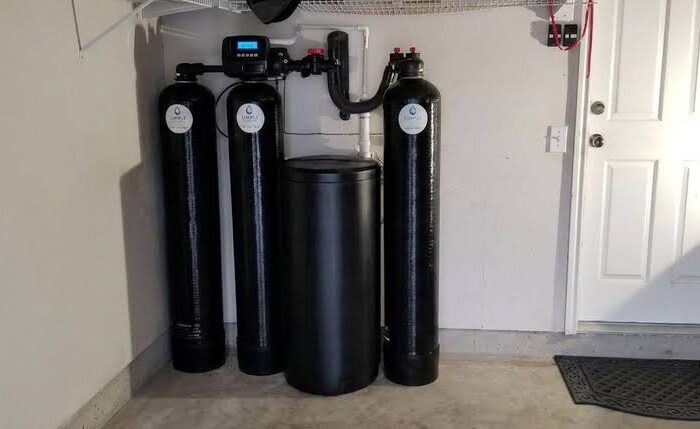
In these situations, combo units may be worth considering. Depending on their design, combination systems bring together two or more treatment technologies in a single setup. A unit might pair water softening with filtration, for example, allowing the equipment to address hardness alongside selected taste, odor, or particle concerns.
The convenience is appealing, particularly in homes with limited installation space. Fewer separate housings can simplify the plumbing arrangement, and a coordinated system may make routine servicing easier. Still, combination equipment isn’t automatically the right choice. Its effectiveness depends on the technologies included, the water conditions, and the system’s capacity.
Before choosing one, ask the provider to explain what each component does. Check which substances the system is certified to reduce, whether the softener is sized for your household, and how often its filters or other consumables need replacing. A product with several treatment stages isn’t necessarily more effective than a simpler unit designed for a specific problem.
It’s also important to consider flow rate. A system should supply enough treated water when multiple people are showering, washing clothes, or using the kitchen at the same time. Otherwise, the convenience of an all-in-one setup may come with an unwelcome drop in water pressure.
Understanding Salt-Free Water Conditioning
Hard water is a common source of household frustration. Calcium and magnesium can form deposits on fixtures, leave spots on glassware, and contribute to scale inside water heaters and appliances. These minerals can also make soap less effective, which means cleaning sometimes takes more effort than expected.
For homeowners exploring alternatives to conventional softening, salt free water conditioners offer another approach. Depending on the technology, these systems may alter how hardness minerals behave so they are less likely to form stubborn scale. Some use specialized media, while others employ different conditioning methods.
There’s an important distinction to understand, though. Most salt-free conditioners do not remove calcium and magnesium from the water in the same way that traditional ion-exchange softeners do. They generally condition the water rather than produce genuinely softened water. As a result, they may help manage scale under suitable conditions, but they won’t necessarily deliver the same changes in soap performance or mineral content.
That difference matters when comparing products. If your main concern is protecting a water heater or reducing scale deposits, a conditioner may be worth investigating. If you specifically need lower hardness levels, a conventional softener may be more appropriate.
Ask for clear performance information based on your water’s measured hardness. Installation requirements, operating conditions, and maintenance also deserve attention. A realistic understanding of what the equipment can accomplish is far more useful than a broad promise that it will eliminate every hard-water problem.
Is Reverse Osmosis Worth Considering?
For drinking and cooking water, homeowners sometimes want treatment that goes beyond improving taste. Depending on the results of water testing, reverse osmosis may be a suitable option for reducing particular dissolved substances.
These systems use pressure to move water through a semipermeable membrane. The membrane reduces many dissolved constituents, although performance varies according to the system and the substances being targeted. Some models also include sediment and carbon prefilters to protect the membrane and improve taste.
Under-sink reverse osmosis systems are common because they focus treatment on water used for drinking and food preparation. Before choosing one, consider available cabinet space, storage capacity, flow rate, and the location of the drain connection. Some models use a storage tank, while others are designed to operate without one.
There are trade-offs. Conventional reverse osmosis systems send some water to the drain during production, and their filters and membranes require periodic replacement. A system may also reduce minerals that contribute to water’s composition. For most homeowners, the practical question is whether the specific reduction benefits justify the cost and maintenance.
Testing can help answer that question. If your primary concern is chlorine taste, a suitable carbon filter may be sufficient. If testing identifies a dissolved contaminant that a particular reverse osmosis model is certified to reduce, the more involved system may provide a useful option. Always verify the manufacturer’s performance claims for the substances that matter to you.
Don’t Forget the Long-Term Costs
The purchase price is only one part of owning a water treatment system. Filters need replacing, softeners may require salt, and some equipment needs professional servicing. Systems can also differ in water use, energy requirements, and the cost of replacement components.
Ask for a complete estimate before making a commitment. Find out what installation includes, how frequently maintenance is expected, and whether replacement parts are readily available. It’s helpful to compare the likely cost over several years rather than focusing solely on the initial payment.
Maintenance should fit comfortably into your routine. Keep records of filter changes and service visits, and follow the manufacturer’s instructions. If the water’s taste, color, pressure, or smell changes unexpectedly, investigate the cause rather than assuming the treatment equipment is responsible.
Make a Choice With Confidence
Better water doesn’t necessarily require the largest or most complicated system. It starts with understanding the water entering your home, identifying the concerns that matter, and choosing equipment with verified performance for those specific needs.
Take time to compare technologies, ask questions, and understand the limitations of each option. A well-selected system should fit your plumbing, household demand, budget, and willingness to handle routine maintenance.
Ultimately, the best treatment setup is the one that solves the right problem without making everyday life more complicated. With reliable testing and realistic expectations, you can make a practical decision and enjoy greater confidence in the water your household uses every day.