There’s a particular kind of frustration that comes with household water problems. You clean the bathroom on Saturday, and by Monday, white marks have returned to the taps. Your morning tea tastes slightly different than it used to, or your shower leaves your skin feeling dry no matter which soap you try. None of these things necessarily means your water is unsafe, but they can make everyday life a little less pleasant.
The tricky part is figuring out what to do about it. Water treatment products aren’t all designed to solve the same problems, and buying the first system that promises cleaner water can lead to disappointment. A better approach is to understand what your water needs, then choose a solution that fits your home, budget, and daily routine.
Start by Understanding Your Water
Before comparing equipment, take a closer look at the water coming into your home. Its quality depends on the source, local geology, plumbing, and any treatment already performed by your water supplier.
Some households struggle with excess minerals that leave scale on fixtures. Others notice a chlorine-like smell, fine particles, or an unpleasant metallic taste. Homes using private wells may face additional concerns, including bacteria, nitrates, or naturally occurring minerals that require specific testing.
These problems can look similar at first, but they aren’t interchangeable. A system that removes calcium and magnesium won’t necessarily remove bacteria, and a filter that improves taste may do little to address dissolved minerals.
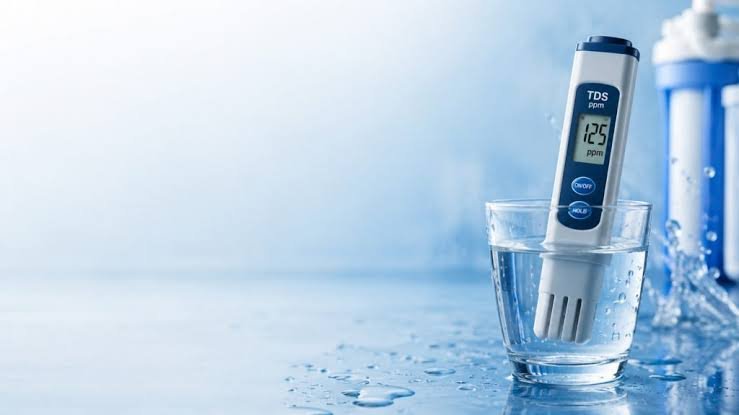
A water test is a sensible first step. If you’re connected to a municipal supply, your local water quality report can provide useful background information. Testing at the tap may also help identify issues related to household plumbing. For private wells, regular laboratory testing is especially important because potentially harmful contaminants aren’t always visible or noticeable.
Once you understand the results, choosing the right equipment becomes much easier.
When a Water Softener Makes Sense
If you’ve noticed chalky deposits around faucets, cloudy marks on glassware, or a crust forming inside your kettle, mineral hardness could be the culprit. Hard water contains dissolved calcium and magnesium, which can accumulate on surfaces and heating elements.
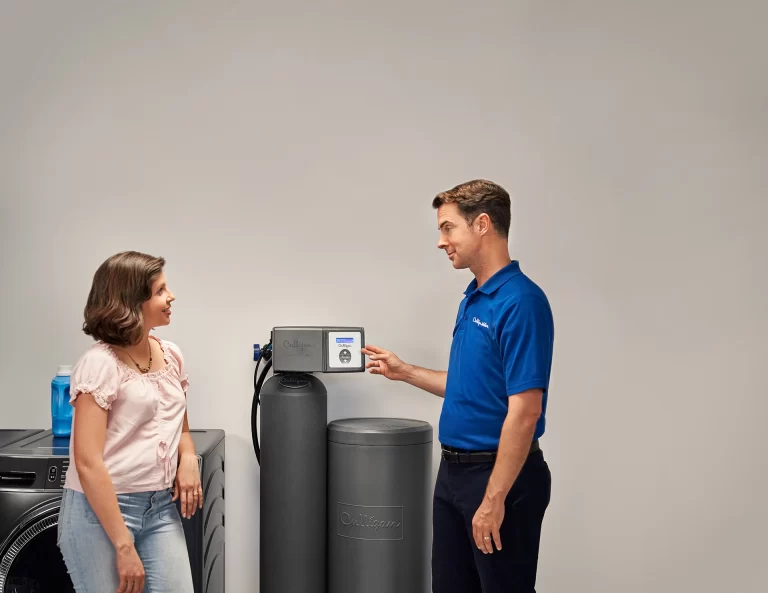
Traditional water softeners address this problem through a process called ion exchange. As water passes through a resin bed, calcium and magnesium ions are exchanged for sodium or, in some systems, potassium ions. The softened water generally produces less scale and allows soap to work more effectively.
For homeowners dealing with persistent mineral buildup, the difference can be noticeable. Showerheads may stay cleaner for longer, laundry can feel less stiff, and appliances that heat water may experience less scale accumulation.
However, softening isn’t necessary for every household. Hardness levels vary, and some people prefer to keep the minerals in their drinking water. Conventional softeners also require maintenance and periodic regeneration, which uses salt or potassium chloride and produces wastewater.
There’s another detail worth considering: ion-exchange softening can increase sodium levels in treated water. People following medically prescribed sodium restrictions may want to discuss their options with a healthcare professional and consider whether a separate drinking water tap or alternative setup would be appropriate.
A softener is useful when hardness is the main concern. It isn’t a complete water purification system, and it shouldn’t be expected to remove every contaminant.
What Whole-Home Filtration Can Do
Sometimes the issue isn’t mineral scale at all. Perhaps your water has an unpleasant odour, visible particles, or a taste that makes you reach for bottled water instead. In these situations, a filtration system may be more suitable.
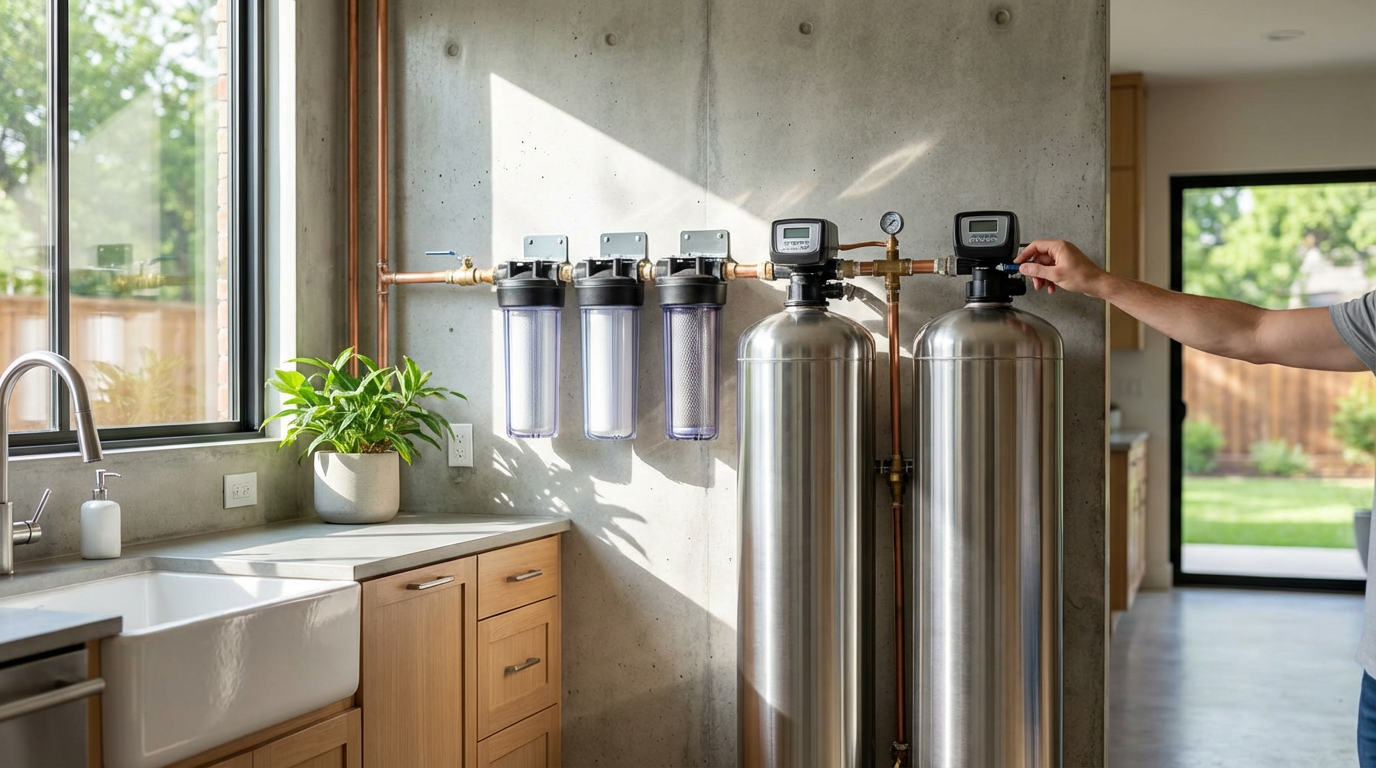
Whole-home filtration treats water as it enters the property, helping address selected water quality concerns throughout the plumbing system. Depending on the filter media and design, it may reduce sediment, chlorine taste and odour, or certain other contaminants.
A sediment filter, for example, captures suspended particles such as sand, silt, and rust flakes. Activated carbon is commonly used to reduce chlorine and improve taste and odour. Other specialised media can target particular substances, but their effectiveness depends on the water chemistry and the system’s verified performance.
One advantage of treating water at the point of entry is convenience. Water supplied to showers, laundry machines, and other fixtures passes through the treatment equipment. This can be useful for households that want to address a problem affecting more than just their drinking water.
Still, the term “whole-home filtration” covers a wide range of products. Some systems are relatively simple, while others combine several treatment stages. Not every model removes lead, arsenic, dissolved salts, or microorganisms. Check the specific contaminant reduction claims and relevant independent certifications before buying.
It’s also worth asking whether you actually need filtration throughout the house. If your only concern is the taste of drinking water, a smaller system at the kitchen sink might be enough.
Is Reverse Osmosis Worth Considering?
For people who want to improve drinking water beyond basic taste and odour filtration, reverse osmosis can be worth exploring.
Reverse osmosis systems use pressure to push water through a semipermeable membrane that separates much of the water from many dissolved substances. Depending on the model and operating conditions, these systems can reduce various dissolved salts, certain metals, and other contaminants.
They’re often installed beneath the kitchen sink, providing treated water through a dedicated faucet. That arrangement makes sense for households that want a specific drinking and cooking supply without treating every litre used for bathing, cleaning, and laundry.
The results can be appealing, particularly when testing identifies dissolved contaminants that ordinary carbon filtration won’t adequately address. However, performance isn’t identical across all systems. Look for independently verified reduction claims that match the contaminants found in your water.
Reverse osmosis also comes with trade-offs. Many systems send some incoming water down the drain during operation, and filters and membranes need periodic replacement. Some models include a storage tank, while others use a tankless design. Installation space, water pressure, and replacement part availability are all worth checking.
Because reverse osmosis removes some minerals along with unwanted substances, the resulting water may taste different from untreated water. Some systems include remineralisation stages to adjust the taste. Whether that feature is worthwhile depends on personal preference and the intended use.
Can You Combine Different Treatment Methods?
In many homes, the best answer isn’t choosing one technology and ignoring the rest. Different treatment stages can complement each other when they’re selected for specific needs.
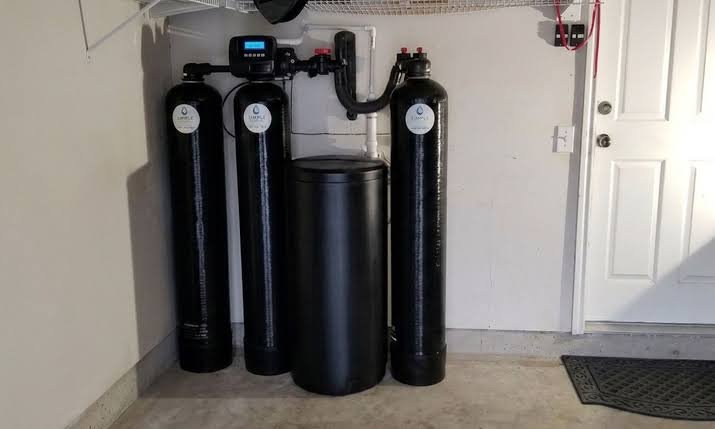
For example, a household with very hard water and an unpleasant chlorine taste might benefit from a softener paired with an appropriately rated carbon filter. Another home could need sediment pretreatment followed by ultraviolet disinfection because microbial contamination is a concern.
A kitchen reverse osmosis unit may also be used alongside a whole-home system, with each component serving a different purpose.
The key is to avoid adding equipment without a clear reason. Every extra component brings installation costs, maintenance requirements, and possible effects on water pressure. A qualified professional should explain why each stage is needed and how the complete arrangement will perform.
Think Beyond the Initial Purchase Price
Water treatment equipment is a long-term household investment, so the purchase price is only part of the calculation. Ask about replacement cartridges, salt requirements, electricity use, servicing, and wastewater generation. Find out how often the system needs maintenance and whether parts will be easy to obtain.
A less expensive system may cost more over time if its cartridges need frequent replacement. On the other hand, a sophisticated setup can be unnecessary if a simple filter addresses the actual problem.
Be cautious of dramatic sales claims, especially when someone suggests that your water is dangerous without providing reliable test results. Good advice should begin with evidence and explain the limitations of the recommended equipment.
Better Water Starts With the Right Choice
There isn’t one perfect water treatment system for every home. Softening helps manage mineral hardness, whole-home filtration can address selected issues across household plumbing, and reverse osmosis offers an additional option for treating drinking water.
The right choice depends on what is present in your supply and what you want to improve. Start with testing, compare verified performance claims, and consider the ongoing costs before making a decision.
You may discover that a straightforward filter is all you need. Or perhaps a combination of technologies will provide better results. Either way, informed decisions are more useful than buying equipment based on promises alone.
Good water treatment isn’t about owning the biggest system or installing every available feature. It’s about understanding your water, solving the problems that matter, and choosing equipment you can maintain comfortably for years to come.