Water treatment sounds simple until you start looking at the options. Suddenly there are filters, softeners, UV systems, reverse osmosis units, cartridges, flow rates, maintenance schedules and a whole collection of technical terms that can make a homeowner wonder, “Do I really need all this?”
Usually, the answer is no. What you need is a system that fits your water, your home and your everyday routine.
That starts with understanding the problem before spending money on the solution. A family dealing with hard water has different priorities from someone worried about sediment or an unusual taste. Treating those situations as if they were identical can result in an expensive system that doesn’t really solve the issue.
Begin With the Water, Not the Equipment
It’s tempting to browse filtration systems first. They look impressive, and product descriptions often promise cleaner, fresher, better-tasting water. But shopping before understanding your water quality is a little like buying medicine without knowing what’s wrong.
Water can contain sediment, minerals, chlorine, microorganisms or other substances depending on its source and local conditions. Municipal water and private well water can behave very differently, too.
That’s why test-first answers are often more useful than assumptions. A reliable water test can identify problems that aren’t visible in a glass of water. Clear water isn’t automatically perfect water, and cloudy water doesn’t necessarily tell you exactly what needs to be removed.
If you’re dealing with a private well, regular testing becomes even more important. Changes in groundwater conditions, flooding, nearby construction or agricultural activity can affect quality over time.
Match the Technology to the Problem
Once you know what’s happening, the next step becomes much easier. Different treatment methods are designed for different jobs.
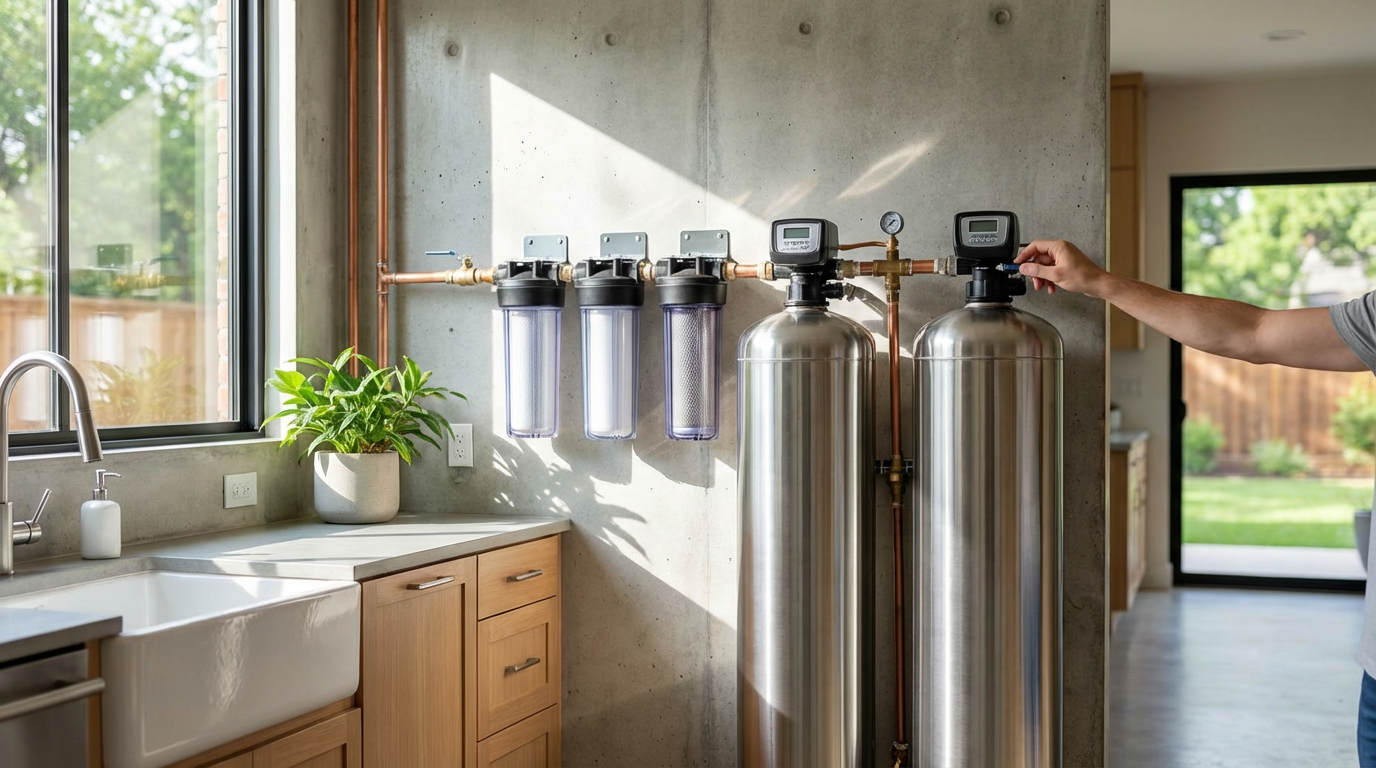
Activated carbon, for example, is commonly used to improve taste and reduce certain chemicals and odors. Sediment filters can capture particles such as sand and rust. Water softeners are designed primarily to address hardness minerals, while reverse osmosis systems can provide more intensive treatment for drinking water.
UV treatment has another role. Rather than filtering particles, ultraviolet light is used to help deactivate certain microorganisms. It can be particularly useful in treatment setups where microbial concerns have been identified.
The important point is that these technologies aren’t interchangeable. Installing a UV system won’t magically remove hardness, and a basic sediment filter isn’t intended to solve every chemical issue. Sometimes a combination makes sense. Sometimes a simple single-stage system is all that’s necessary.
Whole-Home or Point-of-Use?
This is one of the most practical decisions homeowners face.
A point-of-use system treats water at a particular faucet or appliance. It’s often a sensible choice when the main concern is drinking and cooking water. Installation can be relatively straightforward, and you’re not treating every gallon entering the house.
A whole-home system treats water as it enters the property. This means showers, bathroom taps, laundry and other fixtures can receive treated water as well.
Neither option is automatically better. It depends on the problem.
If your concern is a specific contaminant in drinking water, treating the kitchen supply may be enough. If sediment or other water-quality issues affect the entire plumbing system, whole-home treatment may make more sense.
And this is where sizing matters.
The Importance of a Right-Sized System
A filtration system needs to keep up with the home’s actual water demand. Too small, and you may notice reduced flow or pressure when several fixtures are being used. Too large, and you’ve potentially spent more money and space than necessary.
Good right-sized installs consider factors such as household size, peak water demand, incoming pressure and the characteristics of the water itself.
Think about a normal morning. Someone is showering, another person is making coffee, the washing machine starts, and a bathroom tap is running. The treatment system needs to handle those moments without becoming the bottleneck in your plumbing.
This is one reason professional sizing can be valuable. A system shouldn’t be selected simply because its specifications look impressive on a website.
Installation Matters More Than People Think
Even excellent equipment can perform poorly if it’s installed incorrectly. Water treatment systems may involve valves, bypass lines, drains, electrical connections and specific installation requirements.
A poorly positioned filter can make cartridge replacement awkward. An incorrectly configured system may affect pressure. And if maintenance access is blocked by a wall, cabinet or pile of storage boxes, guess what happens? Maintenance gets postponed.
Good installation should make future servicing easy, not just make everything look neat on day one.
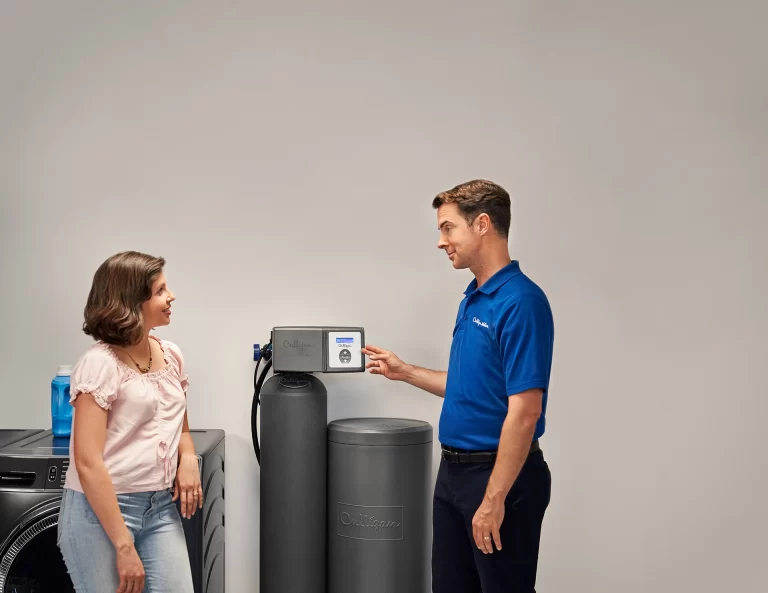
If you’re working with a professional installer, ask what the installation includes. It’s worth knowing whether plumbing modifications, testing, disposal of old equipment and follow-up checks are part of the service.
Maintenance Doesn’t Need to Be a Chore
People sometimes avoid filtration systems because they imagine constant maintenance. In reality, many systems can be managed fairly easily when the routine is clear.
Filters need replacement according to their capacity and usage. UV components may have scheduled replacement intervals. Some systems need periodic cleaning or inspection.
The trick is not to ignore those jobs.
A little simple care can go a long way toward keeping equipment working as intended. Mark replacement dates on a calendar, keep spare cartridges available when practical, and pay attention to changes in taste, pressure or appearance.
Don’t wait for a system to fail completely before checking it. A filter that has been neglected for months isn’t doing anyone much good.
Don’t Let Marketing Make the Decision
Water treatment is an industry where technical language can sound reassuring even when it doesn’t tell you much. Claims such as “advanced purification” or “maximum protection” need context.
Ask specific questions instead.
What contaminants does the system target? What testing supports those claims? How often do filters need changing? What is the expected flow rate? How much do replacement parts cost? Does the system require electricity or a drain connection?
A reputable supplier should be comfortable answering those questions. If you’re getting vague responses or being pushed toward the most expensive package immediately, take a step back.
You don’t need every available feature just because it exists.
Think About Long-Term Value
The cheapest system isn’t always the most affordable one over five or ten years. Replacement cartridges, servicing, electricity, installation and repairs all contribute to the real cost.
On the other hand, buying an overly complicated system isn’t automatically smart either. More equipment means more components to maintain.
The sweet spot is a system that addresses the actual water-quality issue, suits household demand and can be maintained without turning into a financial headache.
That’s a much better measure of value than the price printed on the box.
Clean Water Starts With a Sensible Plan
There’s something reassuring about turning on a tap and knowing the water coming out has been treated appropriately. But getting there doesn’t require guesswork or a cupboard full of equipment.
Start with testing. Understand the problem. Choose technology that addresses it. Make sure the system is properly sized and installed, then keep up with routine maintenance.
That’s really the heart of good water treatment: not buying the biggest or most complicated system, but making a thoughtful choice based on what your home actually needs.
Sometimes the smartest solution is surprisingly simple. And honestly, that’s usually a good thing.