Key PointsChoosing kitchen cabinets can get confusing when you are comparing door styles, colors, finishes, and storage options. A cabinet that looks great in a showroom may not be the right fit for the way you use your kitchen. Start by narrowing down a few things instead of trying to choose everything at once. If you are planning for kitchen cabinets in Davenport, IA, start with your kitchen layout and daily habits. From there, you can focus on the details that will shape the finished kitchen. Where Should You Start with Kitchen Cabinets? Start with the parts of the kitchen that are not changing. The room size, existing plumbing, appliances, windows, and general layout can all affect what cabinet choices make sense. If you are doing a full remodel, you may have more freedom with the layout. If you are keeping some parts of the kitchen, the new cabinets may need to work around what is already there. Before anything else, decide whether you want stock, semi-custom, or custom cabinets. Stock cabinets come in set sizes and ship quickly, which keeps costs down. Semi-custom cabinets offer more size and finish options with a longer lead time. Custom cabinets are built to your exact layout and specifications, which gives you the most flexibility but also the highest cost and longest wait. This decision affects your budget, your timeline, and how far your layout can be adapted, so it is worth settling early. If your existing cabinet boxes are in good condition, refacing is also worth considering. Replacing just the doors, drawer fronts, and hardware can give the kitchen a new look at a lower cost than a full cabinet replacement. A. Think About the Cabinet Style Cabinet doors can change the look of the whole kitchen. Some homeowners prefer simple, flat panels, while others like raised panels, decorative details, or a more traditional appearance. The style of the rest of your home matters too. You do not have to match every room, but cabinets that feel completely out of place can make the kitchen look disconnected. B. Look at Materials and Finishes Cabinets come in different materials, wood types, colors, and finishes, but the construction details are what most affect durability and price. The two main cabinet structures are framed and frameless. Framed cabinets have a face frame attached to the front of the box, which is common in traditional kitchens. Frameless cabinets have no face frame, which gives a cleaner look and slightly more interior space. For the box itself, plywood holds screws better and resists moisture more reliably than particleboard. Dovetail drawer boxes and soft-close hardware are features worth checking for, since they indicate better build quality overall. Look at actual samples when possible. A finish can look very different under showroom lighting than it does in your own kitchen. Put cabinet samples next to your flooring, backsplash, and countertop choices to see how they work together. C. Think About How You Store Things The inside of the cabinet matters just as much as the outside. Take a look at what you keep in your kitchen and where those items usually end up. You may need deeper drawers for pots and pans, a better place for baking supplies, or storage that makes smaller items easier to reach. If you know what is frustrating about your current kitchen, bring those problems into the cabinet planning process. How Do You Choose Cabinets That Fit the Kitchen? Check the measurements before you get too attached to a particular cabinet style. Wall space, ceiling height, appliance locations, windows, doors, and the size of an island can all affect the cabinet layout. A kitchen designer can look at these details with you and show how different cabinet arrangements may work. This is also a good time to think about whether you want more upper cabinets, larger drawers, or a different island setup. What Should You Keep in Mind About Your Budget? It is easy to focus on the cabinet price alone, but a kitchen remodel includes more than the boxes and doors. Installation, hardware, countertops, plumbing, and layout changes can add to the project cost. Cabinetry is typically the longest-lead item in a kitchen remodel, so the cabinet decision affects the entire project schedule. Lead times vary depending on whether you go with stock, semi-custom, or custom, so confirm current availability with your supplier before locking in a start date. Having a budget range in mind can narrow the choices. That gives you a smaller group of cabinet styles and features to compare within your budget. How Can You Narrow Down Your Final Choices? Once you have looked at styles, finishes, storage, and layout, narrow the list down to a few cabinets. Then compare them with the other materials going into the kitchen. It can also help to look at the kitchen as a whole rather than choosing each part separately. Cabinets, countertops, backsplash, flooring, hardware, and lighting all share the same space, so you can see whether the finishes work well together. Conclusion Choosing kitchen cabinets does not have to start with picking a color or door style. Start with how your kitchen is laid out and how you use it, then work through storage, materials, finishes, and budget. Have a cabinet style in mind but still weighing your options? Speak with a local kitchen design expert in Davenport, IA and look through cabinet styles that suit your kitchen and plans.
Choosing kitchen cabinets can get confusing when you are comparing door styles, colors, finishes, and storage options. A cabinet that looks great in a showroom may not be the right fit for the way you use your kitchen. Start by narrowing down a few things instead of trying to choose everything at once.
If you are planning for kitchen cabinets in Davenport, IA, start with your kitchen layout and daily habits. From there, you can focus on the details that will shape the finished kitchen.
Where Should You Start with Kitchen Cabinets?
Start with the parts of the kitchen that are not changing. The room size, existing plumbing, appliances, windows, and general layout can all affect what cabinet choices make sense.
If you are doing a full remodel, you may have more freedom with the layout. If you are keeping some parts of the kitchen, the new cabinets may need to work around what is already there.
Before anything else, decide whether you want stock, semi-custom, or custom cabinets. Stock cabinets come in set sizes and ship quickly, which keeps costs down. Semi-custom cabinets offer more size and finish options with a longer lead time. Custom cabinets are built to your exact layout and specifications, which gives you the most flexibility but also the highest cost and longest wait. This decision affects your budget, your timeline, and how far your layout can be adapted, so it is worth settling early.
If your existing cabinet boxes are in good condition, refacing is also worth considering. Replacing just the doors, drawer fronts, and hardware can give the kitchen a new look at a lower cost than a full cabinet replacement.
A. Think About the Cabinet Style
Cabinet doors can change the look of the whole kitchen. Some homeowners prefer simple, flat panels, while others like raised panels, decorative details, or a more traditional appearance.
The style of the rest of your home matters too. You do not have to match every room, but cabinets that feel completely out of place can make the kitchen look disconnected.
B. Look at Materials and Finishes
Cabinets come in different materials, wood types, colors, and finishes, but the construction details are what most affect durability and price. The two main cabinet structures are framed and frameless. Framed cabinets have a face frame attached to the front of the box, which is common in traditional kitchens. Frameless cabinets have no face frame, which gives a cleaner look and slightly more interior space. For the box itself, plywood holds screws better and resists moisture more reliably than particleboard. Dovetail drawer boxes and soft-close hardware are features worth checking for, since they indicate better build quality overall.
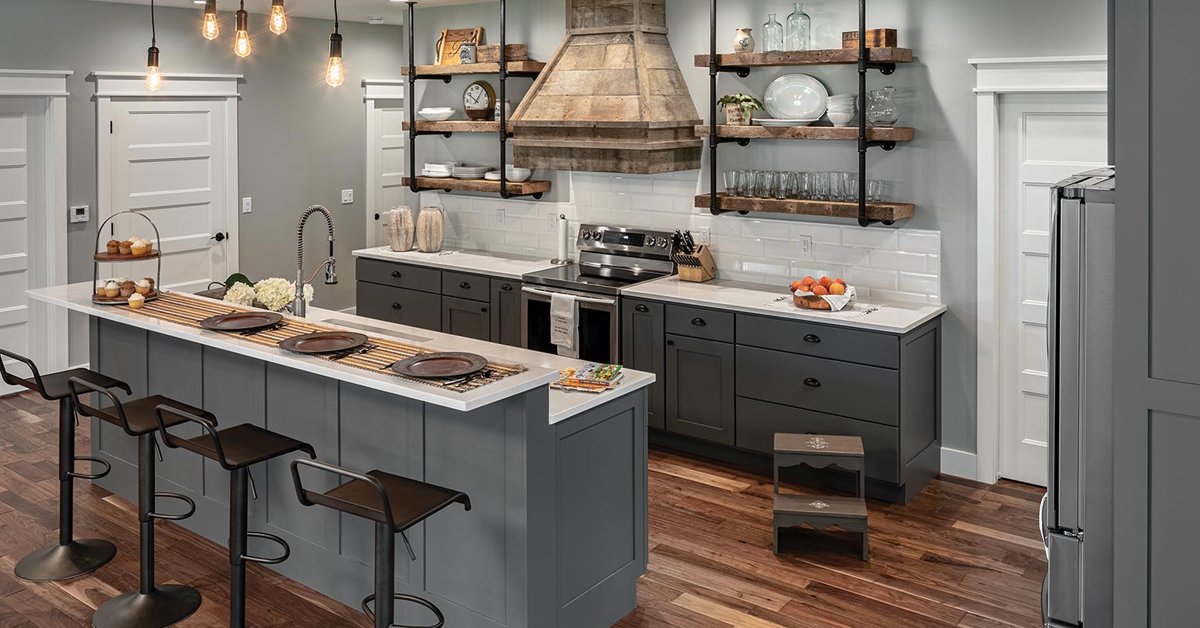
Look at actual samples when possible. A finish can look very different under showroom lighting than it does in your own kitchen. Put cabinet samples next to your flooring, backsplash, and countertop choices to see how they work together.
C. Think About How You Store Things
The inside of the cabinet matters just as much as the outside. Take a look at what you keep in your kitchen and where those items usually end up.
You may need deeper drawers for pots and pans, a better place for baking supplies, or storage that makes smaller items easier to reach. If you know what is frustrating about your current kitchen, bring those problems into the cabinet planning process.
How Do You Choose Cabinets That Fit the Kitchen?
Check the measurements before you get too attached to a particular cabinet style. Wall space, ceiling height, appliance locations, windows, doors, and the size of an island can all affect the cabinet layout.
A kitchen designer can look at these details with you and show how different cabinet arrangements may work. This is also a good time to think about whether you want more upper cabinets, larger drawers, or a different island setup.
What Should You Keep in Mind About Your Budget?
It is easy to focus on the cabinet price alone, but a kitchen remodel includes more than the boxes and doors. Installation, hardware, countertops, plumbing, and layout changes can add to the project cost.
Cabinetry is typically the longest-lead item in a kitchen remodel, so the cabinet decision affects the entire project schedule. Lead times vary depending on whether you go with stock, semi-custom, or custom, so confirm current availability with your supplier before locking in a start date.
Having a budget range in mind can narrow the choices. That gives you a smaller group of cabinet styles and features to compare within your budget.
How Can You Narrow Down Your Final Choices?
Once you have looked at styles, finishes, storage, and layout, narrow the list down to a few cabinets. Then compare them with the other materials going into the kitchen.
It can also help to look at the kitchen as a whole rather than choosing each part separately. Cabinets, countertops, backsplash, flooring, hardware, and lighting all share the same space, so you can see whether the finishes work well together.
Conclusion
Choosing kitchen cabinets does not have to start with picking a color or door style. Start with how your kitchen is laid out and how you use it, then work through storage, materials, finishes, and budget.
Have a cabinet style in mind but still weighing your options? Speak with a local kitchen design expert in Davenport, IA and look through cabinet styles that suit your kitchen and plans.