Key PointsKeys have been the standard for decades, but they were never built for how facilities actually operate today. Staff turnover, contractor rotations, multi-department buildings, and shifting security requirements have outpaced what a physical key can handle. When a key is lost or an employee departs under unfavorable circumstances, the security risk is immediate and the remediation cost is significant. Electronic access control addresses these vulnerabilities directly, providing facility managers with precise control over who enters, where they go, and when. Why Businesses Are Moving Beyond Traditional Keys A physical key provides no audit trail, no scheduling capability, and no method for immediate revocation. Once a key is transferred, control over access is lost. Rekeying locks following a termination or lost key results in substantial costs and operational downtime. In facilities with multiple entry points and rotating staff, this approach becomes unsustainable. An access control system in Duluth, MN, replaces the vulnerability with something manageable. Credentials are issued, adjusted, and deactivated through software. An employee's last day is also the last day the credential remains active, with no physical lock modification required. Contractors receive access for the duration of their project only. Schedules determine when a door can be opened, not just by whom. Control Access by Person, Area, and Time A front desk employee and a network administrator do not need the same doors. An access control system reflects this reality. Permissions are assigned based on role, location, and time of day. A warehouse worker may be granted access to loading areas only during their shift. A facilities manager might have more access throughout the building, but only during business hours. Credential options include proximity cards, key fobs, smart cards, mobile credentials, PIN entry, and biometric readers. The correct mix depends on the security level required, the number of users, and the day-to-day management of the system. There is no single configuration that suits every facility. Key Benefits of Electronic Access Control1. Create an Audit Trail Paper sign-in sheets and manual logs leave gaps. An electronic system records every credential event with the user identity, the specific door, and the exact time. This data is retrievable when an incident needs to be reviewed, when a compliance audit is underway or when security patterns need to be evaluated over time. 2. Simplify Credential Management Deactivating a lost card requires only seconds and eliminates the need for a locksmith. Temporary credentials for vendors or short-term contractors can be scoped to specific doors and set to expire automatically. This level of control previously required significant administrative overhead. With a properly configured system, it becomes routine. 3. Connect Access with Other Security Systems A door event provides greater value when integrated with camera feeds or alarm triggers. Access control connects to video surveillance and intrusion detection through software integrations that tie door events to corresponding camera timestamps. Existing camera infrastructure can often be incorporated, meaning a full system replacement is not a prerequisite. Security personnel can then review footage tied to a specific entry, verify identities, and respond to unusual activity with more context. 4. Cloud-Based vs. On-Premise Management One of the most consequential decisions in an access control purchase is where the system is managed. Cloud-based platforms allow administrators to update credentials, review access logs, and respond to events remotely, with lower upfront hardware costs and automatic software updates. On-premise systems keep all data and processing local, which some industries require for regulatory or network isolation reasons, but they carry higher installation costs and place maintenance responsibility on internal staff. Ongoing cost structures differ significantly between the two, and the right choice depends on the facility's IT infrastructure, compliance requirements, and long-term operational model. Duluth-Specific Hardware Considerations Facilities in Duluth contend with significant temperature swings, and exterior hardware needs to reflect that. Standard readers and door position sensors can fail in extreme cold if not rated for outdoor installation. Fail-safe locks, which release when power is cut, and fail-secure locks, which remain locked, behave differently during outages, and selecting the wrong type for an exit door creates both a safety and a code compliance problem. Request-to-exit devices also require weather-appropriate housings on exterior applications. A power or network outage is one of the first questions every facility manager raises, and the answer should be confirmed before installation: most modern systems support local credential caching so doors continue to function without a live network connection. Choosing the Right Access Control Solution Healthcare environments need strict separation between patient areas, administrative offices, and restricted clinical zones. Under HIPAA, this separation is not simply a best practice. Both facility access control and validation procedures are named implementation specifications within the Security Rule's physical safeguards. Industrial facilities need to manage access across warehouses, loading docks, and equipment rooms. An office building has different concerns than a data center. A solution designed for one facility does not automatically translate to another. A good access control system provider will start with a site assessment to review door hardware, entry points, network infrastructure, and operational requirements. They then recommend equipment based on what the assessment finds. This process prevents the common issue of installing a system that meets a catalog specification but not the actual needs of the building. Conclusion An access control system in Duluth, MN, designed around your facility's layout, staff structure, and security priorities delivers capabilities that traditional keys cannot provide. This includes visibility, control, and the ability to respond when circumstances change. Professional service providers will manage the entire process from assessment to installation and continued support. This ensures that the system functions properly from initial deployment and continues to perform as operations evolve.
Keys have been the standard for decades, but they were never built for how facilities actually operate today. Staff turnover, contractor rotations, multi-department buildings, and shifting security requirements have outpaced what a physical key can handle. When a key is lost or an employee departs under unfavorable circumstances, the security risk is immediate and the remediation cost is significant.
Electronic access control addresses these vulnerabilities directly, providing facility managers with precise control over who enters, where they go, and when.
Why Businesses Are Moving Beyond Traditional Keys
A physical key provides no audit trail, no scheduling capability, and no method for immediate revocation. Once a key is transferred, control over access is lost. Rekeying locks following a termination or lost key results in substantial costs and operational downtime. In facilities with multiple entry points and rotating staff, this approach becomes unsustainable.
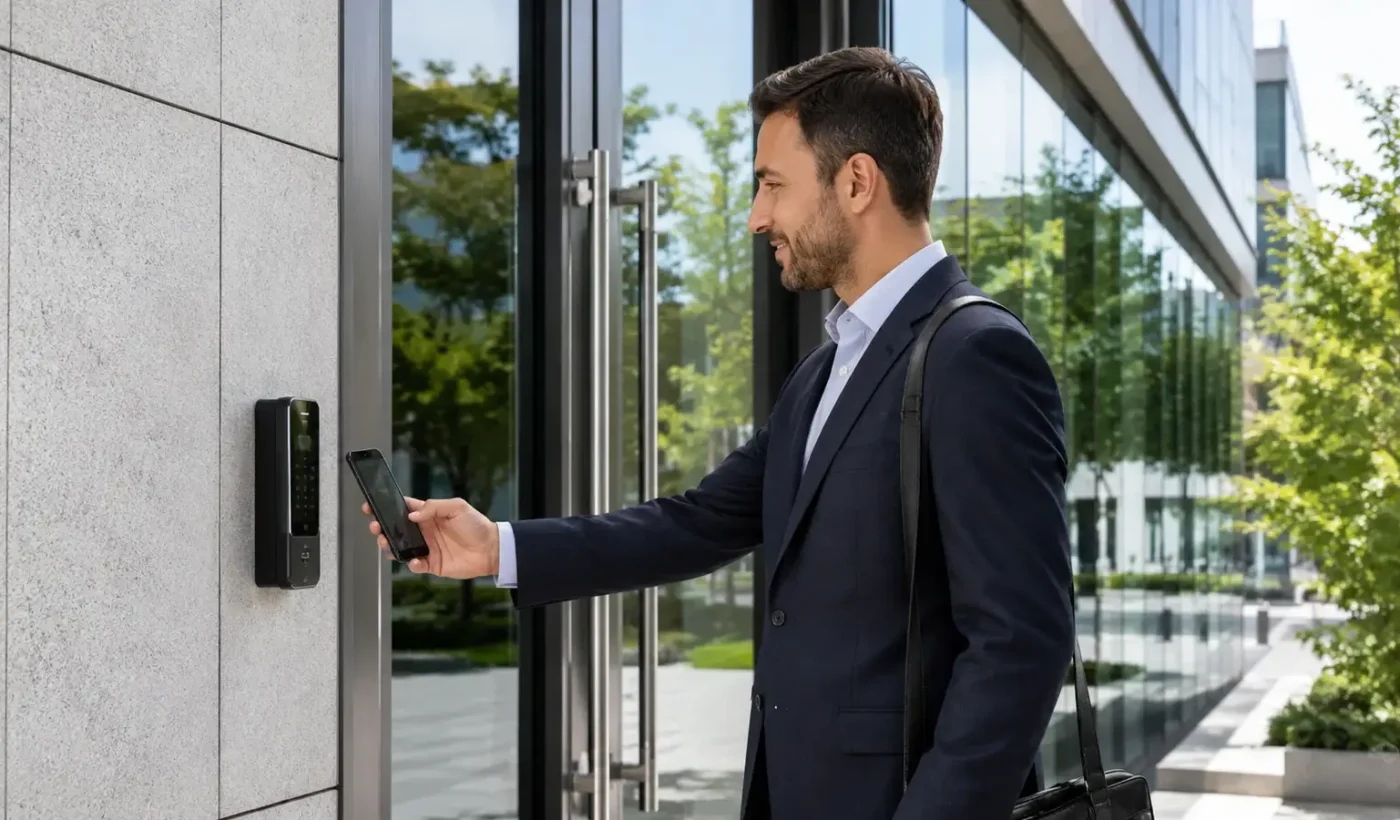
An access control system in Duluth, MN, replaces the vulnerability with something manageable. Credentials are issued, adjusted, and deactivated through software. An employee’s last day is also the last day the credential remains active, with no physical lock modification required. Contractors receive access for the duration of their project only. Schedules determine when a door can be opened, not just by whom.
Control Access by Person, Area, and Time
A front desk employee and a network administrator do not need the same doors. An access control system reflects this reality. Permissions are assigned based on role, location, and time of day. A warehouse worker may be granted access to loading areas only during their shift. A facilities manager might have more access throughout the building, but only during business hours.
Credential options include proximity cards, key fobs, smart cards, mobile credentials, PIN entry, and biometric readers. The correct mix depends on the security level required, the number of users, and the day-to-day management of the system. There is no single configuration that suits every facility.
Key Benefits of Electronic Access Control1. Create an Audit Trail
Paper sign-in sheets and manual logs leave gaps. An electronic system records every credential event with the user identity, the specific door, and the exact time. This data is retrievable when an incident needs to be reviewed, when a compliance audit is underway or when security patterns need to be evaluated over time.
2. Simplify Credential Management
Deactivating a lost card requires only seconds and eliminates the need for a locksmith. Temporary credentials for vendors or short-term contractors can be scoped to specific doors and set to expire automatically. This level of control previously required significant administrative overhead. With a properly configured system, it becomes routine.
3. Connect Access with Other Security Systems
A door event provides greater value when integrated with camera feeds or alarm triggers. Access control connects to video surveillance and intrusion detection through software integrations that tie door events to corresponding camera timestamps. Existing camera infrastructure can often be incorporated, meaning a full system replacement is not a prerequisite. Security personnel can then review footage tied to a specific entry, verify identities, and respond to unusual activity with more context.
4. Cloud-Based vs. On-Premise Management
One of the most consequential decisions in an access control purchase is where the system is managed. Cloud-based platforms allow administrators to update credentials, review access logs, and respond to events remotely, with lower upfront hardware costs and automatic software updates. On-premise systems keep all data and processing local, which some industries require for regulatory or network isolation reasons, but they carry higher installation costs and place maintenance responsibility on internal staff. Ongoing cost structures differ significantly between the two, and the right choice depends on the facility’s IT infrastructure, compliance requirements, and long-term operational model.
Duluth-Specific Hardware Considerations
Facilities in Duluth contend with significant temperature swings, and exterior hardware needs to reflect that. Standard readers and door position sensors can fail in extreme cold if not rated for outdoor installation. Fail-safe locks, which release when power is cut, and fail-secure locks, which remain locked, behave differently during outages, and selecting the wrong type for an exit door creates both a safety and a code compliance problem. Request-to-exit devices also require weather-appropriate housings on exterior applications. A power or network outage is one of the first questions every facility manager raises, and the answer should be confirmed before installation: most modern systems support local credential caching so doors continue to function without a live network connection.
Choosing the Right Access Control Solution
Healthcare environments need strict separation between patient areas, administrative offices, and restricted clinical zones. Under HIPAA, this separation is not simply a best practice. Both facility access control and validation procedures are named implementation specifications within the Security Rule’s physical safeguards. Industrial facilities need to manage access across warehouses, loading docks, and equipment rooms. An office building has different concerns than a data center. A solution designed for one facility does not automatically translate to another.
A good access control system provider will start with a site assessment to review door hardware, entry points, network infrastructure, and operational requirements. They then recommend equipment based on what the assessment finds. This process prevents the common issue of installing a system that meets a catalog specification but not the actual needs of the building.
Conclusion
An access control system in Duluth, MN, designed around your facility’s layout, staff structure, and security priorities delivers capabilities that traditional keys cannot provide. This includes visibility, control, and the ability to respond when circumstances change.
Professional service providers will manage the entire process from assessment to installation and continued support. This ensures that the system functions properly from initial deployment and continues to perform as operations evolve.