The US SEO agency market is going through a visible sorting process right now. On one side are agencies that have built genuine capability for the AI search era — new analytical frameworks, evolved content strategies, AI visibility measurement, and real understanding of how LLMs evaluate and cite content. On the other side are agencies running largely the same playbook they ran in 2021, adding “AI” to their service descriptions without fundamentally changing what they do.
From the outside, these two categories are hard to distinguish during a sales pitch. Both will show you impressive case studies. Both will have polished decks about their process. Both will tell you they’re ahead of the curve. The difference shows up in the work — and in outcomes, usually 6-12 months into an engagement.
For US brands navigating this landscape, understanding what the forward-thinking agencies are actually doing differently is worth the time.
The AI Overview Problem Nobody Has Fully Solved
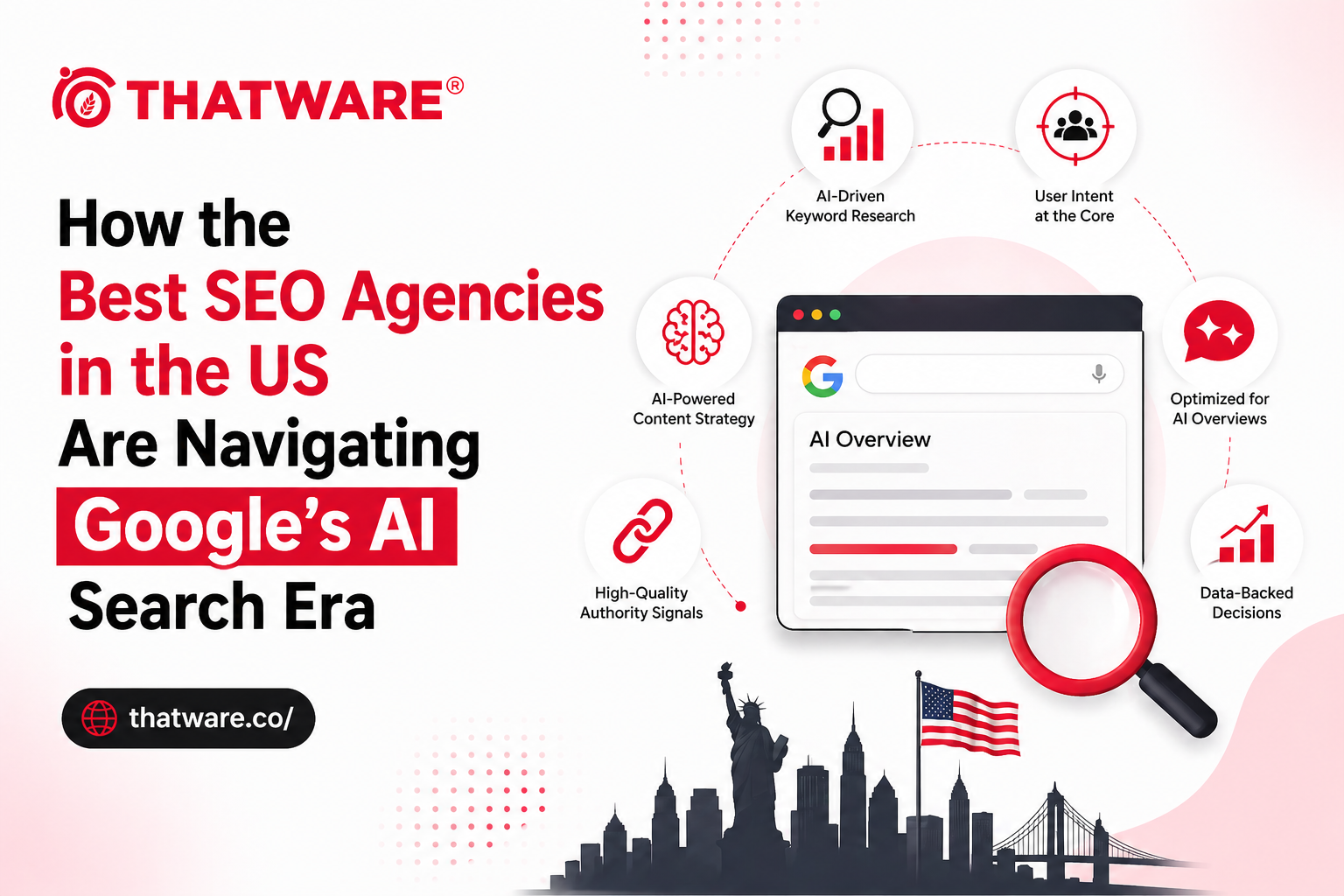
Google’s AI Overviews — the synthesized answer blocks that now appear above organic results for a growing range of queries — have created a visibility challenge that the industry is still working through. A page that ranks #1 for a query may get significantly less traffic if the AI Overview satisfactorily answers the query without the user clicking through. Conversely, a brand that appears as a cited source in an AI Overview can gain brand exposure and credibility even for queries where it doesn’t hold a top traditional ranking.
The best US SEO agencies are tracking AI Overview appearance rates for priority queries as a core metric alongside traditional rankings. They’re analyzing what types of content get cited in AI Overviews versus what drives traditional rankings — and finding that the two sets don’t perfectly overlap. Content that’s comprehensive, directly answerable, and well-structured for information extraction tends to perform in AI Overviews. Content optimized primarily for keyword density and backlink acquisition often doesn’t.
This is driving real strategy changes. More investment in content depth and direct answerability. More attention to structured data that helps AI systems parse content meaning. More emphasis on establishing brand entities as credible, consistent sources across the web.
What Forward-Looking US Agencies Changed First
The agencies that adapted earliest to the AI search era tended to move first on three things.
Content quality standards. The minimum viable content quality for SEO performance has risen faster in the US market than almost anywhere else, because the US is where AI-generated content flooded the web earliest and where Google’s quality-focused updates have had the clearest effects. Agencies that maintained “good enough” content standards through 2023 and 2024 watched their clients get squeezed. Those that raised standards — shorter publishing cadences, higher research investment per piece, more genuine expert input — held performance better.
Entity development programs. Building brand authority in a way that AI systems recognize requires systematic work on how the brand is represented across the web, not just on its own properties. Leading best seo agency usa operations have added entity audits, off-site representation management, and third-party citation building to their standard engagements in ways they didn’t prioritize before.
Measurement expansion. Tracking only keyword rankings and organic traffic misses the AI visibility dimension. Agencies ahead of the curve have built — imperfectly, because the tooling is still maturing — monitoring for AI answer visibility, featured snippet performance, and brand appearance across AI-powered surfaces.
The Competitive Landscape for High-Value Keywords Has Changed
One shift that’s less discussed but very visible to agencies working in competitive US markets: the nature of competition for high-value commercial keywords has changed. Traditional SEO competition was primarily about domain authority, backlink quality, and on-page optimization. Those still matter. But the introduction of AI Overviews has inserted Google as a primary competitor for many informational and even some commercial queries.
When someone searches “what’s the best CRM for a 50-person sales team” and Google’s AI Overview provides a comprehensive, seemingly authoritative answer, the click-through rate to all organic results decreases. The brands appearing as AI Overview sources get some of the residual benefit. Everyone else competes for reduced click inventory.
This isn’t a reason to abandon SEO — it’s a reason to broaden the definition of what you’re optimizing for. Seo company usa operations adapting well to this environment are helping clients think about search visibility more holistically: traditional rankings, AI Overview citations, featured snippets, brand search volume, and the cumulative brand familiarity effects that AI search exposure creates. The whole picture, not just the traditional ranking report.
Technical SEO in the AI Era: Different Emphasis, Not Less Important
Technical SEO remains foundational, but the emphasis has shifted in meaningful ways. Crawlability, site speed, and mobile performance are still essential. But the technical work that’s newly critical is focused on AI and structured data.
Schema markup implementation has become more consequential as AI systems use structured data to parse content meaning. FAQ schema, Article schema with byline and publication date, Product schema, HowTo schema — these are no longer nice-to-haves for rich results. They’re how AI systems understand what your content is and what it knows.
Rendering quality matters for AI systems as well as traditional crawlers. AI systems that use content for training or citation purposes need to be able to reliably access and parse your content. JavaScript rendering issues that intermittently break page content affect AI content access as well as crawl.
Internal linking architecture that creates clear topical clusters — signaling to both traditional search systems and AI systems how your content is organized and what authoritative relationships exist between pieces — has become more explicitly important as topical authority has become more central to ranking.
What to Ask US Agencies About Their AI Search Approach
If you’re evaluating US-based SEO agencies for a competitive engagement, a few questions that surface genuine AI search capability:
How do you measure AI Overview visibility, and what’s your process for optimizing for it? If the answer doesn’t include specific monitoring methodology and content optimization practices, the capability probably isn’t there yet.
Can you show me examples of clients where your work produced AI Overview citations or featured in AI search results? The evidence should exist if the capability is real.
How has your content strategy changed in response to AI search? The answer should be specific. Generic claims about quality aren’t enough — specific changes in how briefs are written, how content is structured, what expertise signals are built in.
Agencies that can answer these questions specifically and with examples are operating with genuine AI search capability. The ones that pivot to general quality claims and process descriptions are probably still running the old playbook.