You turn on the shower, and within seconds, that familiar rotten egg smell fills the bathroom. Meanwhile, the sink you cleaned yesterday already has another reddish-brown stain. For homeowners who depend on groundwater, these frustrations can become an unwelcome part of daily life.
Effective iron & sulfur removal can help address some of the most noticeable well water problems, making household water more pleasant to use while reducing certain maintenance concerns.
However, unpleasant odors and discoloration don’t always have a single cause. Groundwater chemistry is surprisingly complex, and treating one problem doesn’t necessarily resolve another.
The best approach involves understanding what’s present in your water and selecting treatment equipment that addresses those specific conditions. It takes a little investigation, but the results can be well worth the effort.
Why Well Water Develops Stains and Strange Odors
As groundwater moves through underground rock formations and soil, it collects naturally occurring minerals and dissolved substances.
Iron is particularly troublesome because it can leave reddish-brown stains around toilets, sinks, and bathtubs. It may also contribute to metallic-tasting water and discoloration in freshly washed laundry.
Hydrogen sulfide, on the other hand, is commonly associated with an unpleasant rotten egg smell.
Sometimes, this odor becomes more noticeable when running hot water. In such cases, the water heater itself may contribute to the problem.
These characteristics can make everyday activities uncomfortable, especially when you’re entertaining guests or trying to keep your home looking presentable.
Identifying where the problem originates helps determine which treatment method makes the most sense.
Keeping Sand, Dirt, and Suspended Particles Out of Your Plumbing
Not all groundwater concerns involve dissolved substances. Some wells produce water containing fine sand, silt, rust, or other suspended materials.
Installing appropriate sediment filtration can help capture these particles before they travel through connected household plumbing and reach sensitive appliances.
Sediment filters are often positioned near the main water supply connection, where they serve as an initial treatment stage.
Different cartridges offer different particle retention capabilities. Choosing an excessively fine filter without considering water conditions may lead to frequent clogging and reduced water pressure.
The objective is to achieve effective particle reduction without creating unnecessary maintenance problems.
For properties experiencing substantial sediment accumulation, additional investigation into the condition of the well may also be worthwhile.
Understanding Your Water Before Choosing Treatment Equipment
It’s tempting to purchase a filtration system based on visible symptoms alone. Orange stains suggest iron, and unpleasant odors might indicate sulfur-related problems. But appearances don’t always tell the complete story.
A dependable approach to well water quality treatment begins with appropriate testing to identify mineral concentrations, microbial concerns, and other characteristics that may influence equipment selection.
Testing for iron, manganese, hardness, and pH can provide valuable information when designing a treatment arrangement.
Laboratory analysis for bacteria, nitrates, and other locally relevant contaminants is equally important for evaluating drinking water safety.
These findings help determine whether your property requires specialized filtration, oxidation, softening, disinfection, or several coordinated treatment stages.
Having reliable information can save considerable frustration and unnecessary spending later.
How Specialized Filtration Addresses Iron and Sulfur Problems
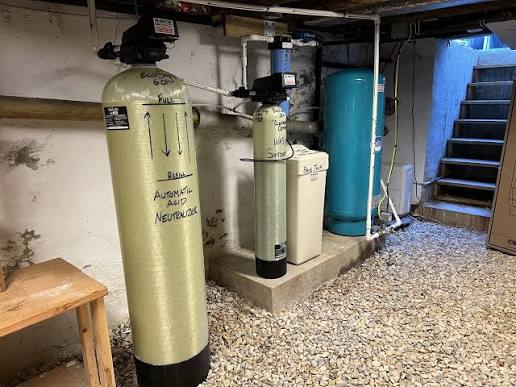
Removing dissolved iron and hydrogen sulfide often requires more than an ordinary household filter.
Certain treatment systems use oxidation to convert dissolved substances into forms that can be removed through suitable filtration media.
Air injection and chemical oxidation are among the available approaches, depending on incoming water chemistry and contaminant concentrations.
Specialized media may also help address particular iron and sulfur-related concerns.
However, equipment selection must account for factors such as pH, water consumption, and the form of iron present.
For instance, dissolved iron requires different consideration from visible rust particles.
A properly designed treatment arrangement can help reduce staining and objectionable odors without requiring homeowners to constantly deal with their consequences.
Making Laundry and Household Cleaning Less Frustrating
Anyone who’s discovered orange marks on a freshly washed white shirt understands how irritating iron-rich water can be.
Bathroom cleaning can become equally demanding when discoloration keeps returning, regardless of how thoroughly surfaces are scrubbed.
Appropriate treatment may help reduce future staining, making household cleaning more manageable.
There are practical benefits beyond appearance, too. Reducing suspended particles may help protect faucet aerators and certain appliance components from accumulated debris.
When excessive hardness is also present, separate softening equipment may help limit mineral scale formation.
These improvements often become noticeable gradually. A bathroom that stays presentable for longer or a laundry routine with fewer unpleasant surprises can make ordinary household responsibilities considerably easier.
Maintaining Your Well Water Filtration System
Once water quality improves, it’s easy to forget about the equipment working quietly behind the scenes.
Nevertheless, filtration systems require consistent maintenance. Sediment cartridges accumulate debris, specialized media may need servicing, and oxidation equipment requires appropriate operating conditions.
Follow manufacturer recommendations and pay attention to unexpected changes in water pressure, appearance, or odor.
Regular laboratory testing remains important because groundwater conditions can change over time.
Additional testing may be necessary after flooding, well repairs, or sudden changes in water characteristics.
Remember that eliminating unpleasant odors and visible stains doesn’t necessarily establish drinking water safety.
Enjoying a More Dependable Household Water Supply
Living with well water shouldn’t mean accepting rusty fixtures, unpleasant showers, or endless cleaning.
With reliable testing, thoughtfully selected treatment equipment, and consistent maintenance, homeowners can address many common groundwater concerns.
The real benefit isn’t simply having clearer-looking water. It’s enjoying greater confidence in your household supply and spending less time dealing with recurring water-related frustrations.
Sometimes, a more comfortable home begins with something as ordinary as turning on the faucet.