You finish cleaning the bathroom, step back to admire your work, and notice those familiar white marks still clinging to the faucet. A few days later, they’re back in full force. The showerhead looks crusty, your drinking glasses seem cloudy, and the kettle has developed another layer of mineral deposits.
Sound familiar?
Hard water is a common household concern, and Michigan homeowners can encounter it whether their water comes from a municipal supply or a private well.
Although hard water generally isn’t considered dangerous to your health, it can make cleaning more frustrating and contribute to mineral accumulation inside plumbing fixtures and appliances.
Fortunately, water softening offers a practical way to manage these problems. Understanding how it works can help you make a sensible decision for your home.
Why Hard Water Is a Concern for Michigan Homeowners
Water naturally collects minerals as it moves through underground rock and soil. Depending on local geology and the water source, the concentration of these minerals can vary considerably.
Homeowners researching water softener systems in michigan often want solutions for recurring mineral deposits, soap residue, and hardness-related appliance maintenance.
However, not every Michigan property experiences the same water conditions.
One neighborhood might have moderately hard municipal water, while a nearby home relying on a private well could have significantly different mineral concentrations.
That’s why choosing equipment based entirely on a neighbor’s recommendation isn’t always the smartest approach.
A simple hardness test can provide useful information about your household’s water.
Once you understand the results, it’s easier to determine whether a conventional softener would be beneficial and what capacity your home might require.
What Are Hard Water Minerals, Exactly?
The main hard water minerals responsible for household hardness are calcium and magnesium. They’re naturally occurring substances that dissolve into groundwater as it passes through certain geological formations.
These minerals aren’t generally harmful at concentrations normally found in drinking water.
The inconvenience comes from how they behave during everyday household activities.
When hard water evaporates from a faucet or shower door, it can leave behind chalky residue. Heating water may also encourage certain mineral deposits to form inside water heaters and other equipment.
You’ll probably recognize several familiar signs:
- White deposits around faucets and showerheads.
- Cloudy spots on glassware and dishes.
- Soap that doesn’t lather as easily as expected.
- Mineral accumulation inside kettles.
- Scale deposits in hot-water equipment.
Interestingly, a cloudy drinking glass doesn’t always indicate contamination. Sometimes, it’s simply a matter of mineral residue remaining after the water dries.
Of course, unusual water changes should still be investigated rather than automatically blamed on hardness.
Can Water Softeners Really Prevent Mineral Scale?
One of the biggest reasons homeowners consider water softening is the desire to eliminate scale buildup and spend less time scrubbing stubborn deposits from household surfaces.
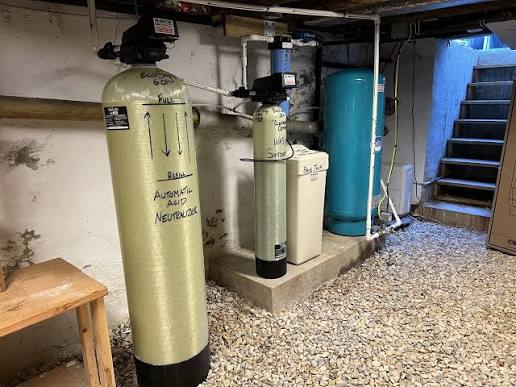
Conventional softeners can substantially reduce the formation of new hardness-related scale by removing calcium and magnesium through ion exchange.
Inside the softener, specialized resin captures hardness minerals and exchanges them for sodium or potassium ions, depending on the equipment.
The system periodically regenerates using a salt solution to restore the resin’s treatment capacity.
This process helps reduce the minerals responsible for hard-water deposits.
However, it’s important to keep expectations realistic.
Water softening doesn’t necessarily remove existing scale immediately or prevent every kind of spotting. Other dissolved substances can still leave residue, and established deposits may require separate cleaning.
The practical benefit is reducing the conditions that cause new hardness-related accumulation.
Choosing a Water Softener That Fits Your Household
A family of five with several bathrooms will probably use more water than someone living alone in a small apartment.
Naturally, their equipment requirements may differ.
When selecting a water softener, consider the measured hardness level, daily water consumption, peak demand, and available installation space.
Some systems regenerate according to a preset schedule, while demand-initiated designs adjust regeneration based on water usage.
Depending on the model and operating conditions, demand-based regeneration may help avoid unnecessary salt and water consumption.
It’s worth asking about maintenance expenses, regeneration efficiency, and warranty coverage before purchasing equipment.
A properly sized system should handle normal household demand without introducing unnecessary complications.
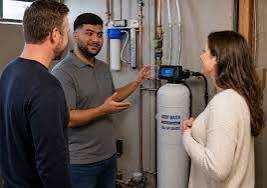
Professional installation can also help ensure the equipment is connected correctly and configured for your property’s plumbing conditions.
How Softer Water Can Improve Everyday Household Routines
The benefits of reducing hardness aren’t limited to bathroom fixtures.
Softer water can help soap and detergent work more effectively, potentially making laundry and routine cleaning easier.
In kitchens, reduced hardness may mean less mineral accumulation in kettles and water-heating equipment.
It’s worth remembering that a softener isn’t the same as a drinking water filter.
If your water has an unpleasant taste or contains particular contaminants, additional treatment may be necessary.
Municipal water customers can review local water quality reports, while private well owners should arrange appropriate laboratory testing.
Understanding these differences helps prevent unnecessary purchases.
Keep Your Water Softener Working Properly
Even a reliable water softener requires occasional maintenance.
Check the salt level, follow manufacturer cleaning recommendations, and arrange servicing when needed.
If familiar hardness deposits begin returning unexpectedly, test the treated water and investigate whether the equipment is operating correctly.
Regular attention is usually far easier than dealing with neglected equipment later.
A Small Home Improvement With Lasting Practical Value
Hard water can be irritating, particularly when mineral deposits keep returning despite your best cleaning efforts.
But choosing a water softener shouldn’t involve guesswork.
Start with a hardness test, understand your household’s water consumption, and select equipment that addresses your actual needs.
You might still have to clean the bathroom on Saturday mornings. That’s life.
At least, with properly softened water, those stubborn mineral deposits may become one less thing competing for your attention.